The first six weeks has been a big change for me as I have been out of study for a long time. This has been both exciting and overwhelming at times. I started my placement in a primary school from the second week where as most others had not started theirs which I found quite intense, I was set written work from my placement soon after. Starting my placement early gave me a practical insight into art therapy which ran alongside the theory we were learning. It also brought up unsettling memories of being at school although things seem to have changed a lot since. The school is based in East London and is very multicultural. It is a very creative school there is art all around from the children as well as local artists who have been commissioned to come in. The first few weeks I observed the different age groups from nursery up to year 6, followed by observing individual children that I was going to be helping.

The art therapy department which is a charity within the school is very nicely set out and welcoming for the children. There is a tent, dolls house, books, a table and lots of different art materials. It is hidden away from the classrooms and has net curtains so no one can see in and it has a sense of privacy.
The art therapist in the school (my mentor) appears to be a very organised and a strict lady. She gave us a booklet on the first day with rules of what we could and could not say in art therapy sessions from the 1970’s. I found this approach to be a bit restrictive and outdated. I found her hard to relate to as she was so formal. The other student on the placement found the same. She asked us very probing questions. I started to think about transference in this situation and what it was bringing up from the past and why I do not like authority figures.
The importance of play came up on my placement. Our mentor said we should play with the children to build rappore to begin with. I found this interesting and so started exploring this further. I decided to go to the Wellcome Collection exhibition called Play Well, Why Play Matters. There were several areas of interest at the exhibition. I also started reading ‘Playing and Reality’ by D.W. Winnicott.
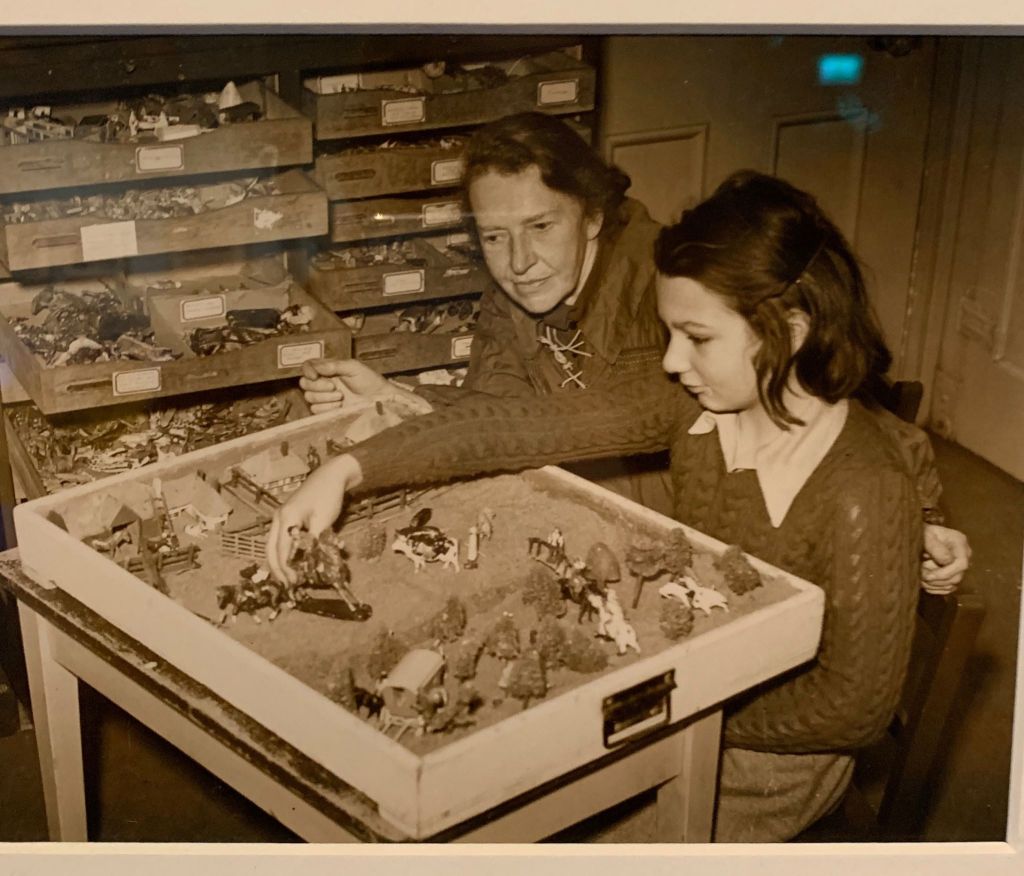
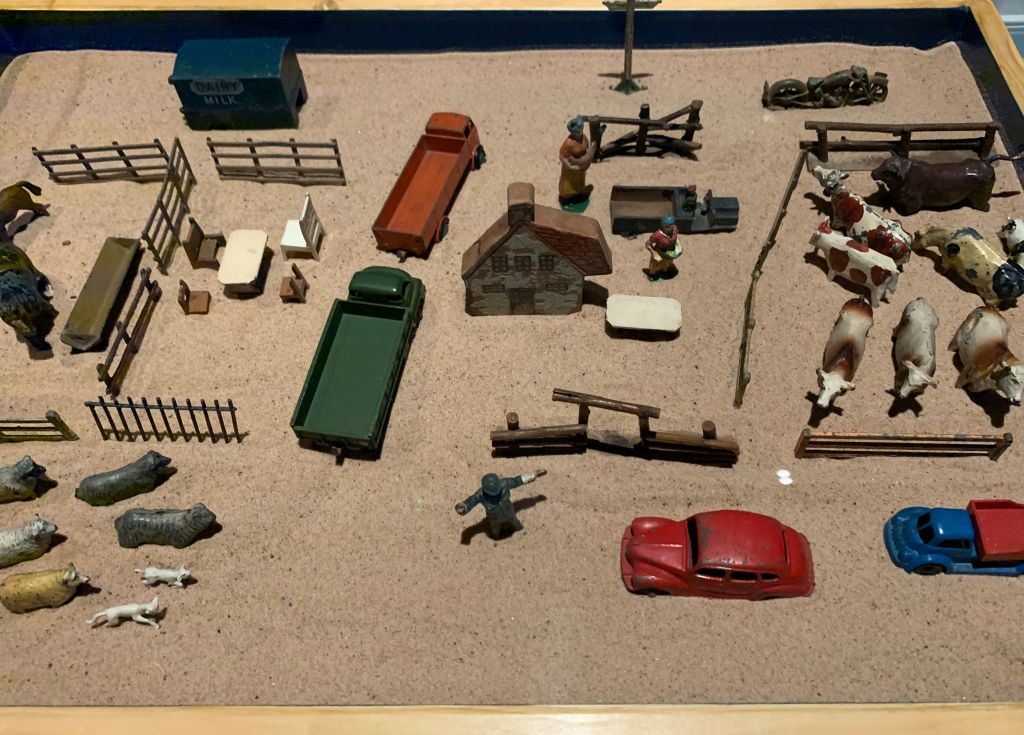
Margaret Lowenfeld founder of the Institute of Child Psychology argued for , “play as a sensory language through which children are better able to express themselves than with words.”
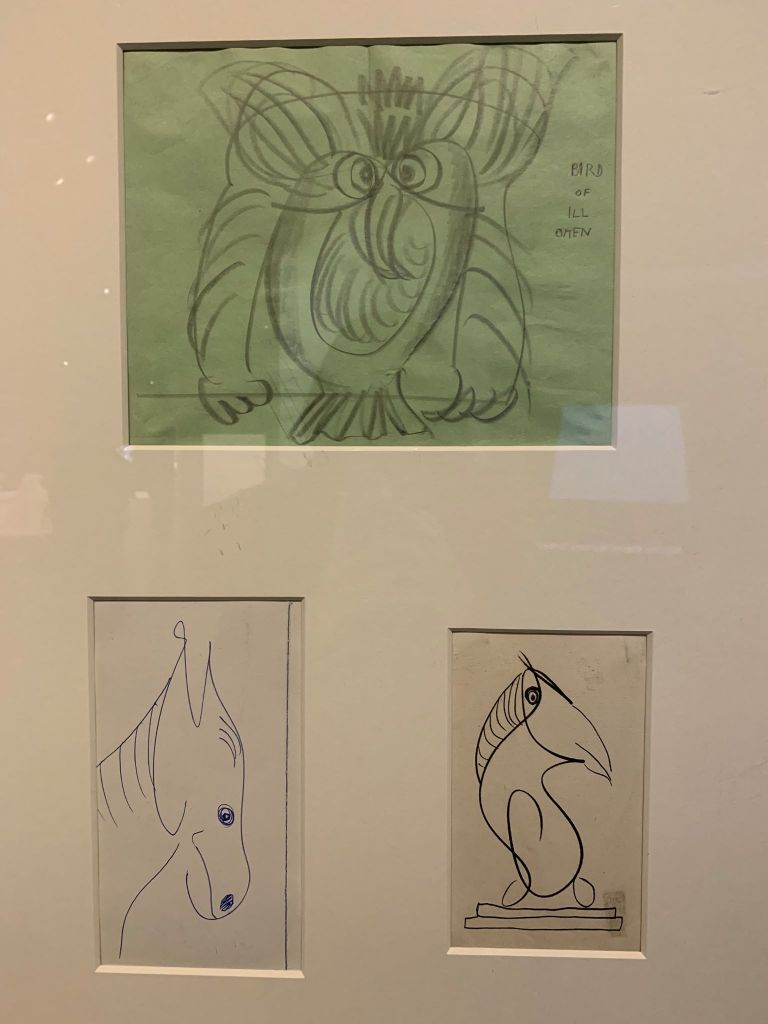
Squiggle Drawings, D.W Winnicott various clients 1950-71 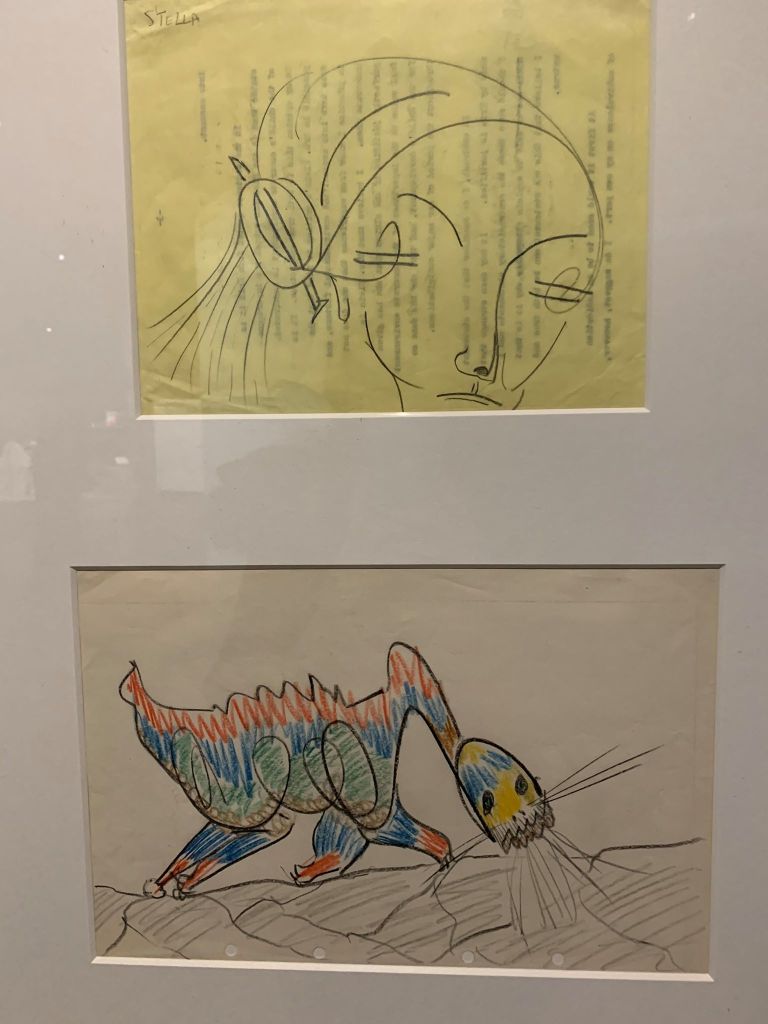
‘A playful man, he used various games to facilitate communication between child and therapist.’

Mosaic created by Adam, age 14 Mosaic set and tray 1930. ‘ Mosaic making is the first technique that the children encounter at the initial assessment in Lowenfeld-based therapy. Adam was experiencing suicidal thoughts. Through discussions with Adam about making this mosaic he was able to articulate the feelings of suffocation he was feeling as the only child of estranged parents. The Wellcome Collection.
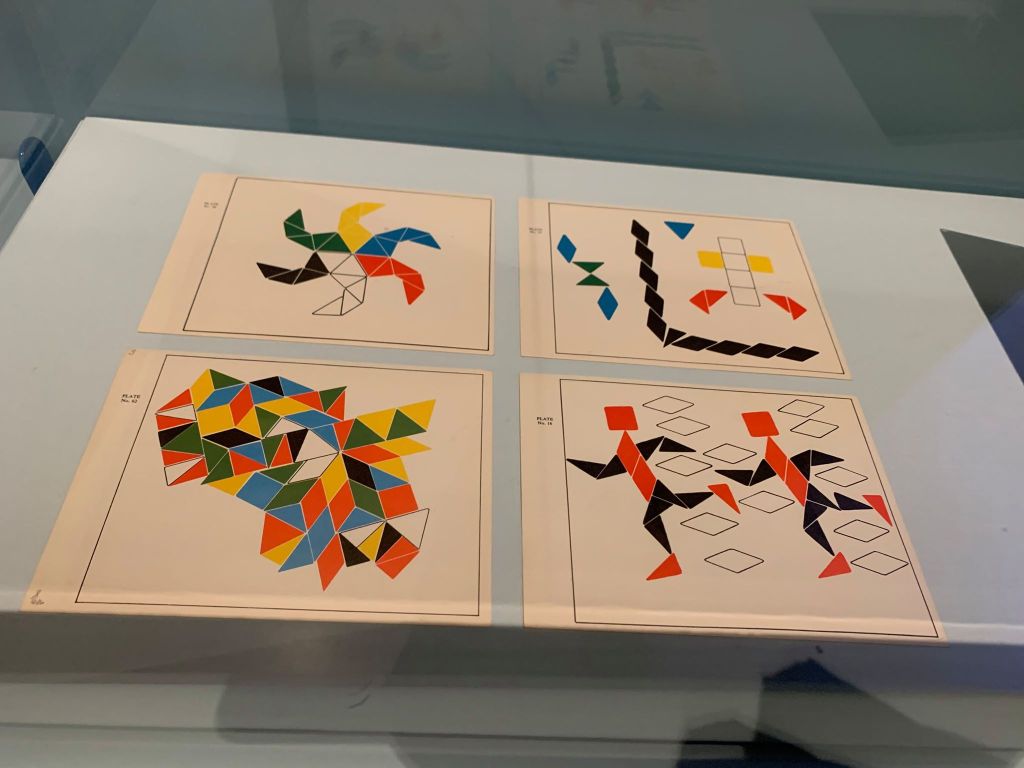


Frobels Gifts – Play was the main focus of all kindergarden activities, which included singing, dancing, storytelling and gardening. Frobel also devised a series of objects that he called the gifts, and a set of guided activities, known as the Occupations. There were twenty different gifts, made of simple materials, each designed as a progression for specific stages of development. Fobels gifts went on to have a lasting impact on 20th century art education and creative practice. The Wellcome Collection
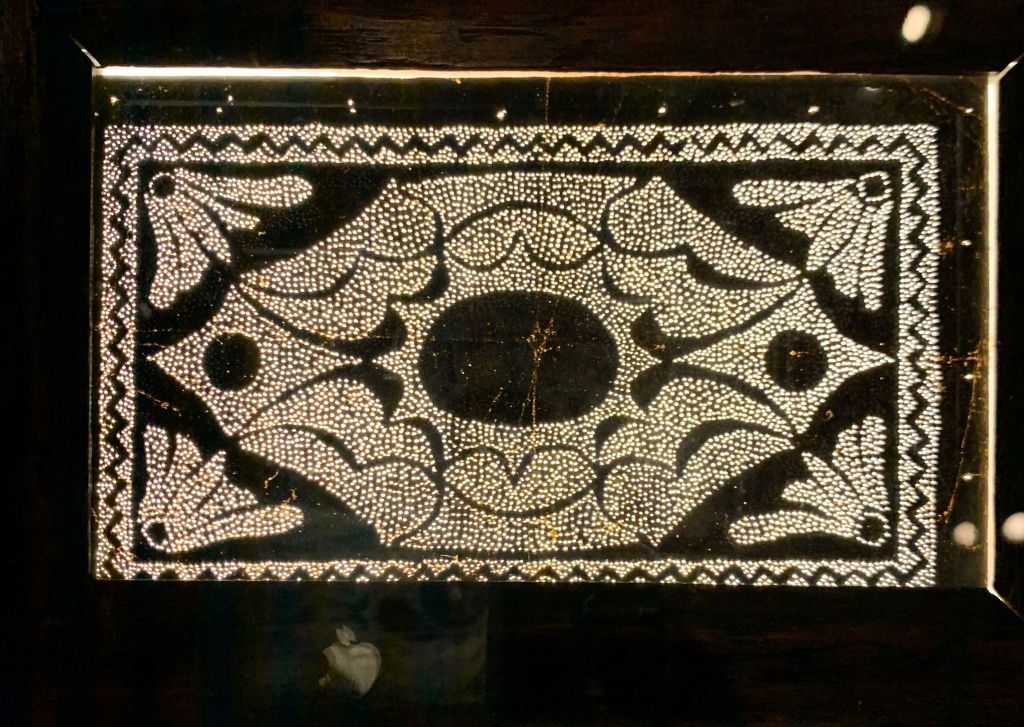
Pinprick example Friedrich Frobel 1824. made using a sharp pencil-like tool used for the perforating paper. It was inspired by observing children’s intuitive activity of making holes in paper. This was in fitting with Frobel’s philosophy of interdependance and unity in nature; that the part always contributes to the whole. Froebel Archive for Childhood Studies; University of Roehampton / The Froebel Trust. The Wellcome Collection
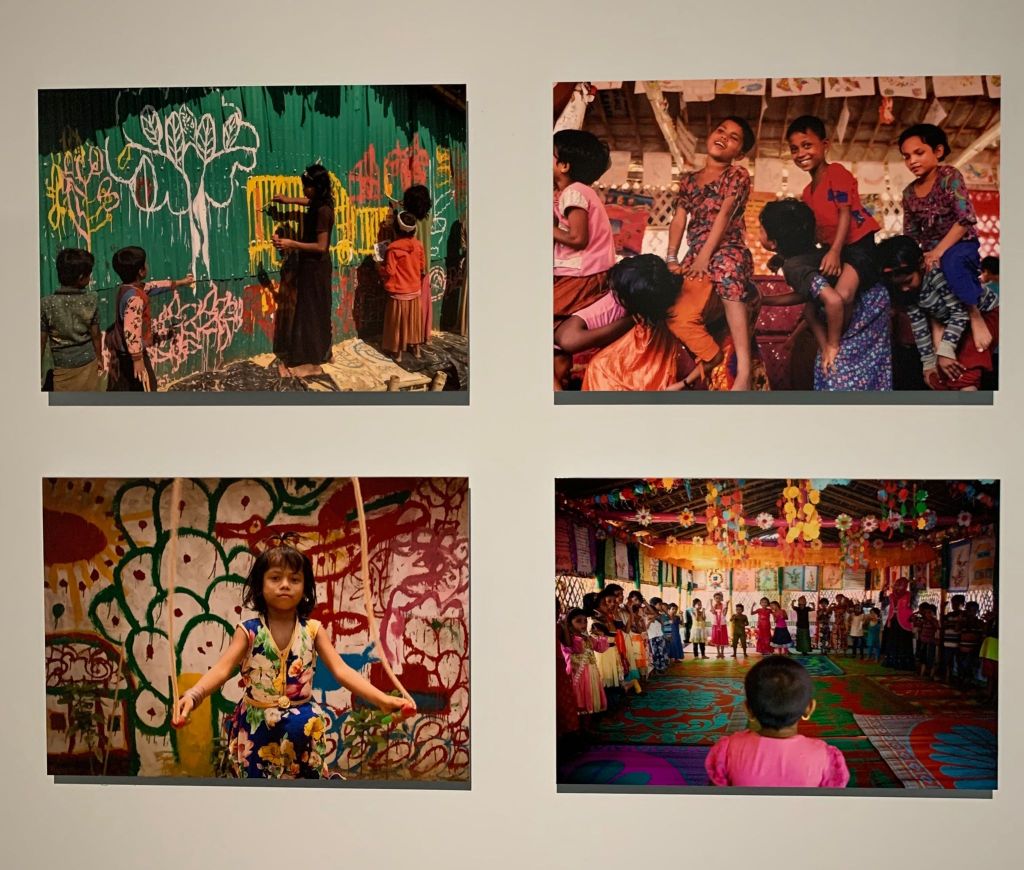
Healing through physical play Sheikh Shananuzzaman Angkan 2019
Engaging in joyful play Kamrul Hasan 2018
Chanting kabbya as a part of therapeutic play Sheikh Shananuzzaman Angkan 2019
Children customise interior spaces through paintings, patterns, motifs and stitched works. These reference Rohingya culture and provide a sense of rootedness at a time of displacement.
BRAC Institute of Educational Development.
The Wellcome Collection
D.W. Winnicott, Playing and Reality
The Wellcome Collection Exhibition (2019) Play Well, Why Play Matters.
 MA Art Therapy Blog